

Speakers DG-EBF • CVPR 2026

MEET THE SPEAKERS

Our distinguished invited speakers bring perspectives from across machine learning, computer vision, causality, and robotics to advance the frontiers of domain generalization.

Invited Speakers

Speaker biographies, in order of appearance in the program.

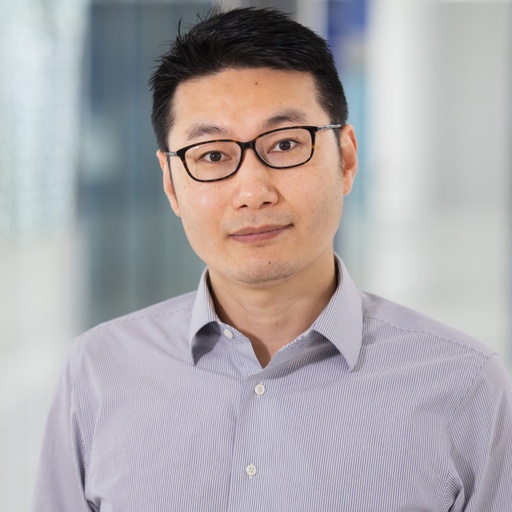
Zsolt Kira
Zsolt Kira
Georgia Tech

Zsolt Kira is an Associate Professor in the School of Interactive Computing at Georgia Tech and an Associate Director of the Machine Learning Center (ML@GT), where he leads the Robotics Perception and Learning (RIPL) lab. He received his Ph.D. from Georgia Tech in 2010 and was previously a research scientist at SRI International Sarnoff and a senior research scientist and branch chief at the Georgia Tech Research Institute (GTRI), with which he remains affiliated. His work lies at the intersection of machine learning and AI for perception and robotics, with a strong emphasis on generalization and robustness, including recent work on robust fine-tuning of vision-language and vision-language-action models, continual/lifelong learning, and learning beyond full supervision.

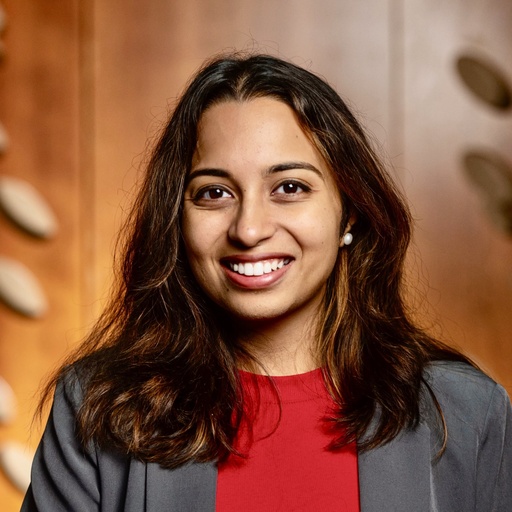
Sara Beery
Sara Beery
MIT

Sara Beery is the Homer A. Burnell Career Development Professor and an Assistant Professor in the Department of Electrical Engineering and Computer Science (EECS) at MIT, where she is a member of CSAIL and is affiliated with the MIT-IBM Watson AI Lab. Her research focuses on building computer vision methods that enable global-scale environmental and biodiversity monitoring across data modalities, tackling real-world challenges including strong spatiotemporal correlations, imperfect data quality, fine-grained categories, and long-tailed distributions. She received her PhD in computing and mathematical sciences from Caltech, and her honors include an AI2050 Early Career Fellowship and an NSF CAREER Award. She also founded the AI for Conservation community and is the founding director of the Caltech Summer School on Computer Vision Methods for Ecology.

Aditi Raghunathan
Aditi Raghunathan
Carnegie Mellon University

Aditi Raghunathan is an Assistant Professor in the Computer Science Department at Carnegie Mellon University, also affiliated with the Machine Learning Department and the Language Technologies Institute. Her goal is to make machine learning more reliable and robust, with work that advances trustworthy AI by translating insights from the scientific study of frontier-model failures into methods that make them robust and safe, and a long-running focus on robustness to distribution shifts in the wild. She received her PhD from Stanford University in 2021 and was previously a postdoctoral researcher at Berkeley AI Research. Her recognition includes the Sloan Research Fellowship, NSF CAREER Award, Schmidt AI2050 Early Career Fellowship, Google Research Scholar Award, Forbes 30 Under 30 recognition, and an Outstanding Paper Award at ICML 2025.

Kun Zhang
Kun Zhang
MBZUAI

Kun Zhang is a Visiting Professor of Machine Learning, Associate Department Chair of Machine Learning (Research), and Director of the Center for Integrative Artificial Intelligence (CIAI) at MBZUAI. He also holds a professorship in the Department of Philosophy at Carnegie Mellon University, where he is an affiliate faculty member in Machine Learning. His research interests lie in machine learning and AI, especially causal discovery and inference, causal representation learning, and machine learning under data heterogeneity, with applications motivated by real problems in healthcare, biology, neuroscience, computer vision, computational finance, and climate analysis. He received his Ph.D. in Computer Science from the Chinese University of Hong Kong and was a senior research scientist at the Max Planck Institute for Intelligent Systems before joining CMU. He served as a general and program chair of the first Conference on Causal Learning and Reasoning (CLeaR 2022) and program chair of UAI 2022.

M. Saquib Sarfraz
M. Saquib Sarfraz
Mercedes-Benz / KIT

M. Saquib Sarfraz is Principal Lead of Deep Learning at Mercedes-Benz Tech Innovation, where he drives AI innovation across generative AI, autonomous perception, and smart manufacturing. He was previously Senior Scientist and Lecturer at the Karlsruhe Institute of Technology (KIT), where he was part of the Computer Vision for Human-Computer Interaction (CVHCI) group. He received his PhD in Computer Vision from the Technical University of Berlin and earlier founded and directed the Computer Vision Research Group at the COMSATS Institute of Technology in Pakistan. He is well known for the FINCH clustering algorithm and has broad research contributions in clustering, representation learning, and computer vision.

Abhinav Dhall
Abhinav Dhall
Monash University

Abhinav Dhall is an Associate Professor in the Department of Data Science & Artificial Intelligence at Monash University, whose research is mainly in the broad domain of automatic human behaviour understanding. He moved to Australia from the Indian Institute of Technology Ropar, where he led the Learning Affect & Semantic Image Analysis group and headed the Centre for Applied Research in Data Sciences. His interests span human-centred computing, affective computing, multimodal systems, and deepfake detection. He received his PhD in computer science from the Australian National University and pursued postdoctoral research at the University of Waterloo and the University of Canberra. He is an Associate Editor of IEEE Transactions on Affective Computing and co-organizes community challenges, including the deepfake detection challenges at ACM Multimedia.